Founder & CEO
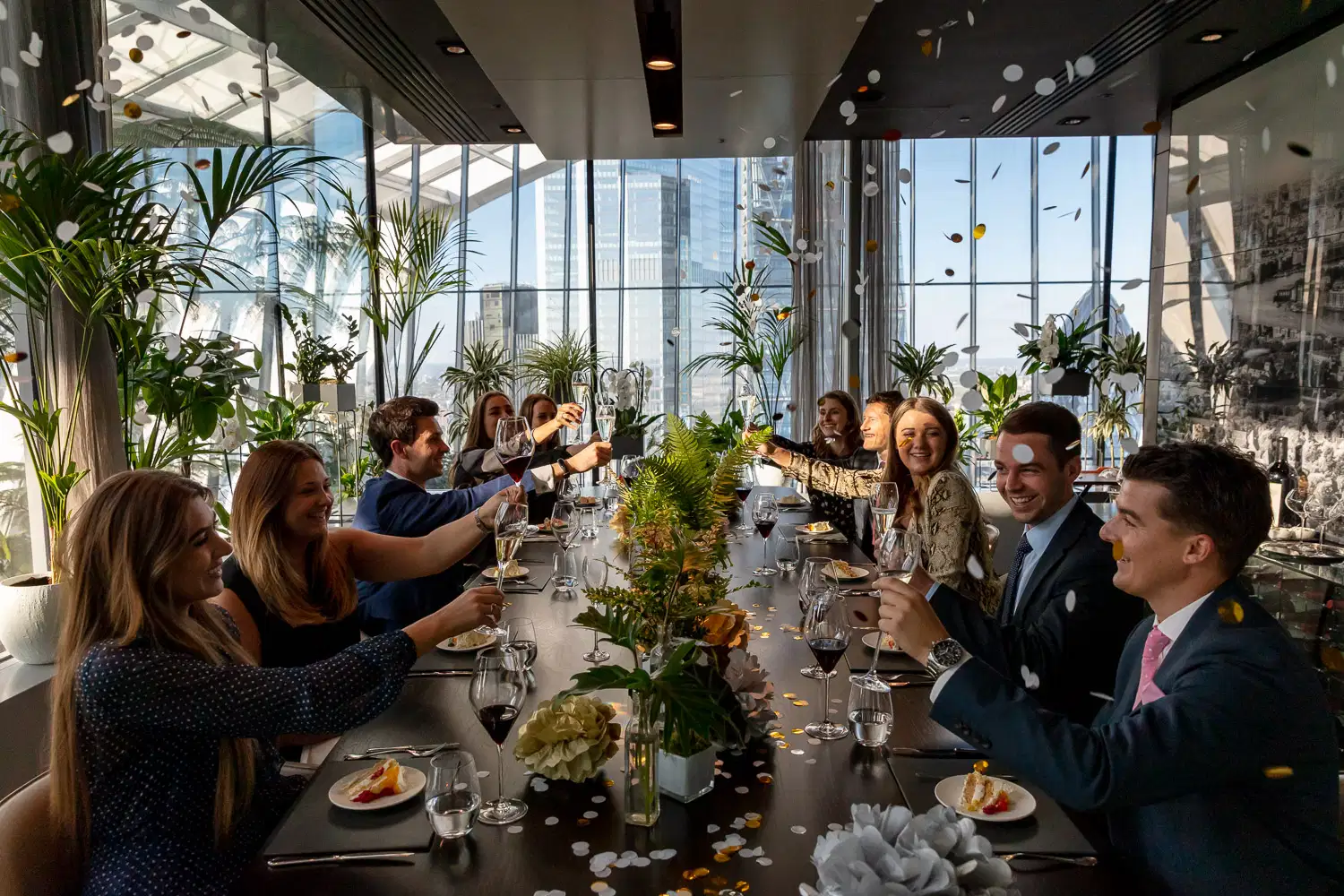

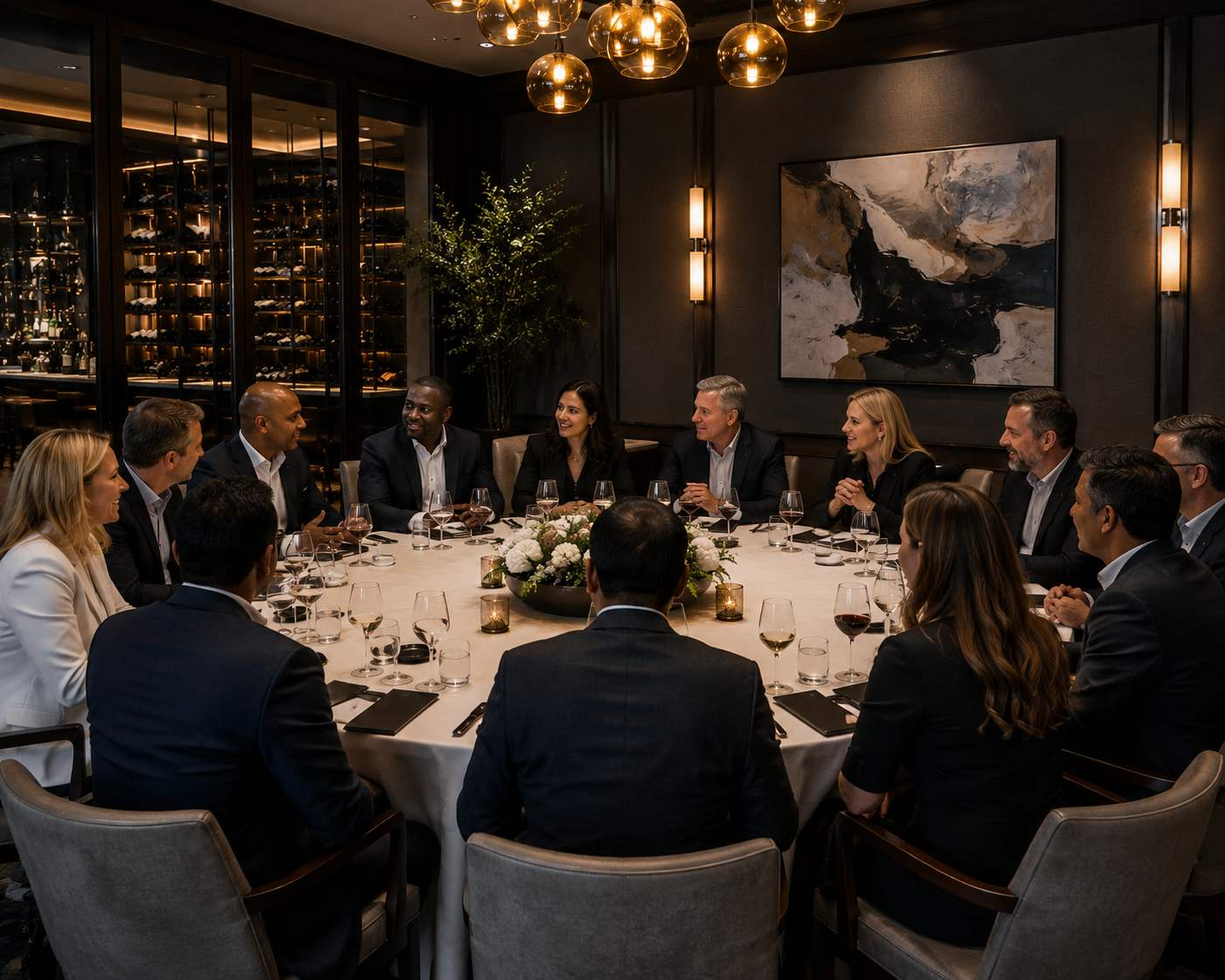
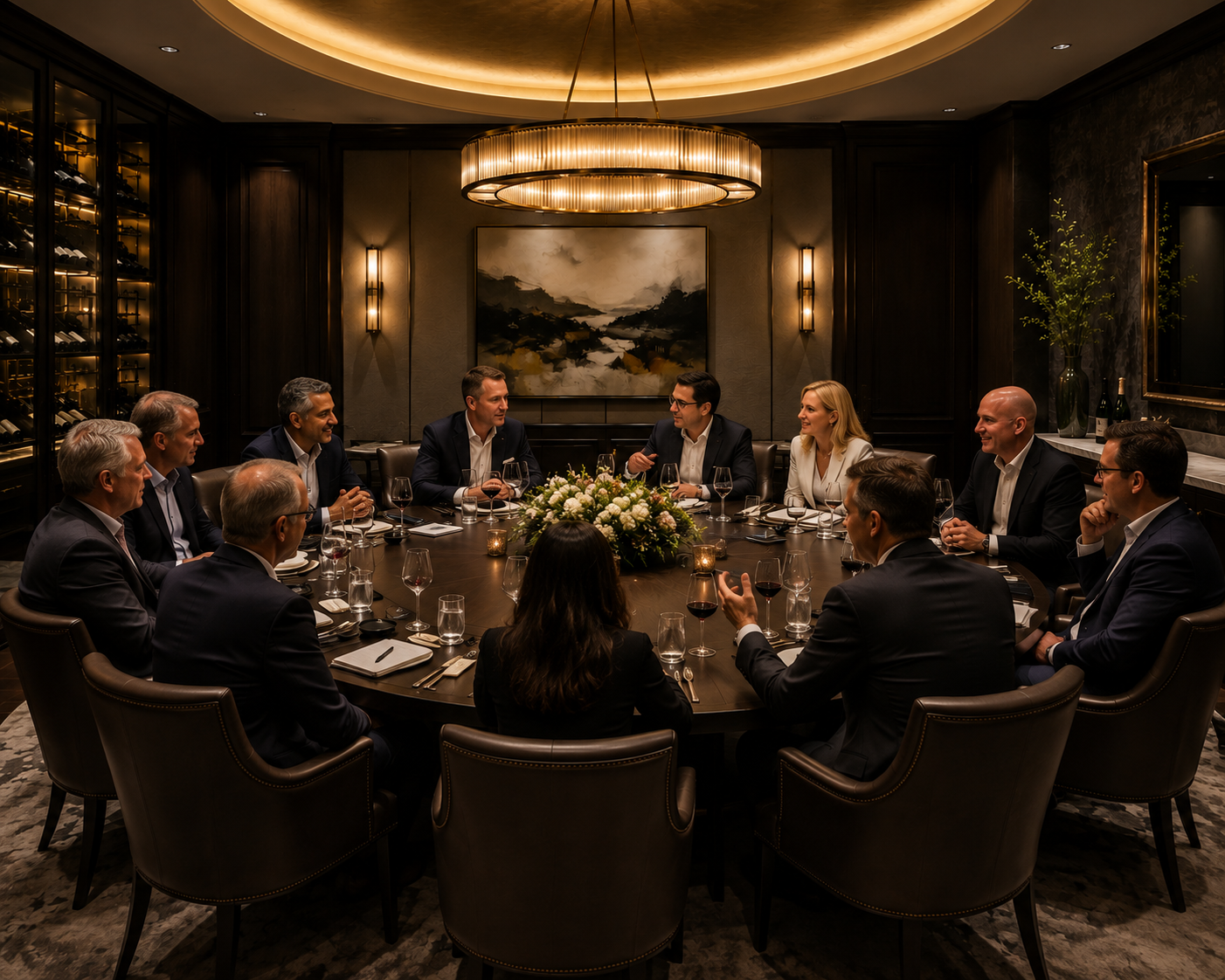
An executive dinner looks simple when you see the finished product: a private room, a well-set table and a dozen senior leaders having an unusually candid conversation. What you do not see is the campaign behind it.
Before the first guest arrives, somebody has defined the audience, tested whether the addressable market is large enough, built and cleaned the data, developed the topic, created the invitation, sourced the venue, recruited and qualified dozens of registrants, managed cancellations, researched the guests, prepared the host and designed the follow-up.
Done well, an executive dinner can give a B2B company something that is increasingly hard to obtain through conventional demand generation: meaningful time with a small group of relevant senior decision-makers. Done badly, it becomes an expensive meal attended by the wrong people, dominated by a sales pitch and followed by a generic email.
This guide explains how to plan the former. It is based on the operating approach we use at CXO & Co, including the numbers behind a typical 15-20 person dinner. You can use it as a DIY playbook, a way to brief an agency or a checklist for assessing an existing event programme.
A B2B executive dinner is a small, invitation-only event that brings together senior leaders to discuss a specific business issue over dinner. Unlike a conference, its value comes from intimacy. Unlike client entertainment, it has a deliberate discussion proposition. Unlike a sales meeting, it is designed around peer exchange rather than a product presentation.
The usual goal is not to close a deal at the table. It is to create access, trust, insight and a credible reason for a relevant commercial conversation afterwards.
At CXO & Co, the typical target is 15-20 external guests at C-level or VP level, with two client representatives and an independent host or facilitator. That produces a working room of about 15–24 people: large enough to create a range of perspectives, but small enough for everyone to contribute.
The format works particularly well for complex, high-value B2B sales: opening relationships with target accounts, accelerating opportunities, strengthening customers, building category authority and learning how buyers describe their priorities.
The first mistake is treating the dinner as the objective. The dinner is a mechanism. Start by deciding what should change because the event happened.
Many executive-dinner plans begin with a date, a city and a restaurant. That is backwards. Start with the business outcome.
Be specific. “Build pipeline” is too broad to guide the campaign. A useful objective might be to create first engagement with 10 named enterprise accounts, accelerate a group of existing opportunities, deepen relationships with customers in a new market or establish the company as a credible voice on an emerging issue.
The objective determines everything that follows. New-logo access requires a large enough market and strong cold outreach. Opportunity acceleration requires sales coordination and awareness of account sensitivities. Customer expansion is more relationship-led. Thought leadership may justify a broader audience, but still needs a precise shared concern.
Agree the measurement model at this stage. Attendance is important, but it is a delivery metric. Commercial measures may include target accounts represented, new executive relationships, completed follow-up meetings, opportunities created or progressed, customer expansion conversations and pipeline influenced over the following months.
Do not attribute every future deal entirely to one dinner. Enterprise sales rarely works that neatly. Record the dinner as a meaningful account touchpoint and assess what changed: access, trust, stakeholder coverage, insight, meeting activity or opportunity momentum.
“CIOs in financial services” is not a complete audience definition. Before recruitment begins, document the inclusion and exclusion criteria.
These may include:
Job title alone is unreliable. The same title can mean very different things at a 250-person company and a global enterprise. Some people hold multiple current roles. Others use prestigious titles without owning the relevant responsibility. Every important record needs validation against the campaign criteria.
One of the most common planning errors is confusing the desired room size with the size of the recruitment market.
At CXO & Co, we generally want a reachable universe of at least 5,000 relevant prospects to recruit 15 or more guests confidently. That number is not a promise that every audience requires exactly 5,000 people. Warm communities, highly compelling speakers or existing customer relationships can change the economics. But for a net-new campaign aimed at senior executives, it is a sensible planning threshold.
Why so many? Because the funnel narrows at every step:
5,000 relevant prospects → reachable contacts → people who notice the invitation → people interested in the topic → registrations → qualified registrations → confirmed guests → attendees.
If the market contains only a few hundred plausible people, the team may exhaust it before filling the room. The temptation is then to loosen the criteria, accept less-senior guests or introduce unrelated job functions. That can fill seats while destroying the peer value that attracted the best guests in the first place.
Market sizing should therefore happen before the venue contract is signed. If the viable audience is too small, change the geography, broaden the company criteria carefully, refine the format or reconsider the campaign.
5,000+ target prospects might seem like a lot, but when you consider you can only find contact information for 2,000 of them, and you need 40+ registrations to get 15-20 qualified guests, that is a hit rate of approximately 2%. That is 5-10x higher than a typical cold outreach campaign.
Seniority does not automatically create shared relevance. A CIO, CISO, CFO, CHRO and CMO may all be executives, but they rarely experience the same problem in the same way.
A productive dinner normally centres on one functional community or a tightly connected set of roles. If the title and discussion questions must be rewritten to make sense to half the table, the audience is probably too broad.
This is also why qualification matters. A full room of loosely relevant executives is usually less valuable than a slightly smaller room of genuine peers.
Delegate acquisition is only as strong as the data underneath it. Poor data wastes outreach capacity, damages sender reputation, produces embarrassing personalisation errors and makes the campaign appear less considered than the experience you are promising.
The work normally includes:
This cannot be solved by exporting a list from one platform and loading it directly into an outreach tool. Sources such as LinkedIn Sales Navigator, Apollo, ZoomInfo and email-enrichment providers can accelerate research, but their records still require judgement and cleaning.
The team should also agree who owns ambiguous cases. Is a divisional CIO at an acceptable company large enough? Does a global role based outside the city qualify? Is a senior consultant a useful peer or a service provider who changes the character of the room? These decisions are easier when made before outreach begins.
Top tip: Score your leads using AI, then rank them in descending order, with the best fit leads at the top of the targeting list.
Senior executives do not attend because a vendor wants pipeline. They attend because the room promises useful peers, a timely issue and a conversation they cannot get from a webinar or sales call.
A weak proposition is centred on the host company:
Join us to learn how our AI platform transforms enterprise operations.
A stronger proposition is centred on a decision the audience is already confronting:
How are CIOs governing agentic AI without slowing adoption?
The second works because it contains a tension. It invites comparison and acknowledges that intelligent leaders may take different approaches.
A good executive-dinner topic should pass five tests:
1. Relevant: Is this an issue the target executive genuinely owns or materially influences?
2. Current: Is there a reason to discuss it now rather than next year?
3. Specific: Can an executive immediately understand what the conversation will cover?
4. Debatable: Are there trade-offs, competing approaches or unresolved questions?
5. Non-promotional: Would the discussion still be worthwhile if the sponsor’s product were never mentioned?
Avoid topics so broad that every attendee interprets them differently. “The future of digital transformation” may sound important, but it gives the moderator little to work with and the guest little reason to prioritise the invitation. Narrower tensions create better messages and better conversations.
Once the topic is agreed, develop the event title, short proposition, three or four discussion questions and invitation copy together. They should feel like one promise. If outreach implies a candid peer discussion but the agenda introduces a product demonstration, trust disappears quickly.
An executive invitation has to answer several questions in seconds:
Keep the message clear and personal. Explain the strategic issue, the seniority or functional peer group, the intimate format and the absence of a sales presentation. The venue can add reassurance, but it should not be the main reason to attend.
Poor messaging usually fails in one of four ways: it is generic, excessively promotional, vague about who the event is for or too long to understand quickly. Poor positioning can also attract the wrong people. If the invitation sounds like broad networking, expect registrations from people who want access to the audience rather than people who belong in it.
Create message variants for different audience segments, but do not let personalisation turn into invented familiarity. A credible reference to the person’s role, company context or relevant public work is more effective than superficial tokens inserted at scale.
The venue is part of the proposition, but prestige alone is not enough. The practical question is whether the room helps 15–18 people have one coherent conversation.
Look for:
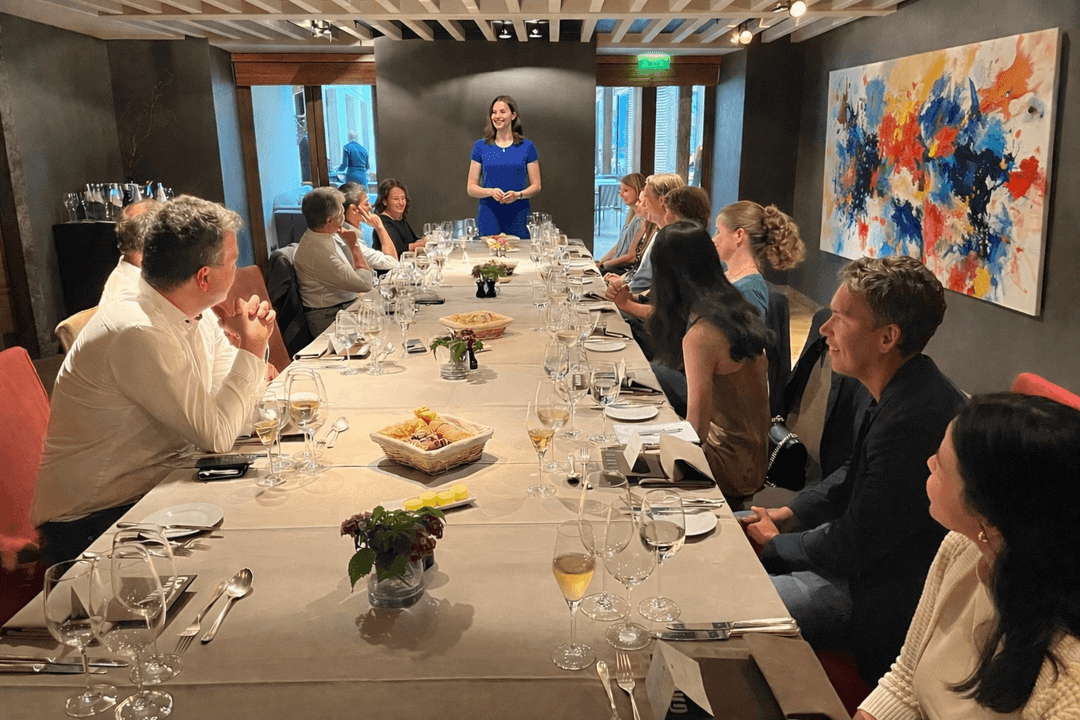
A long narrow table can make a single conversation difficult. An oversized room makes an intimate dinner feel poorly attended. Loud music, intrusive service or long gaps between courses can break the discussion repeatedly.
Confirm the food-and-beverage minimum, room hire, service charge, tax, deposit, cancellation terms, final-number deadline, menu deadline, alcohol package and charges for AV or additional furniture. Establish what happens if attendance changes in the final week.
For a working group of 20 people, 12–15 external attendees, two client seats and a dinner host, CXO & Co recommends budgeting $9,000–$15,000 for venue, food and alcohol, depending on the city and standard of venue.
The number is deliberately broader than the menu price. Private-room minimums, drinks, service, tax and premium-market pricing can materially change the total. Treat the guest experience as one integrated budget rather than comparing restaurants on food cost alone.
Do a site visit or, at minimum, inspect the exact room rather than relying on photographs of the wider venue. Ask where the host will sit, how staff will serve without disrupting the discussion, whether doors close properly and what adjacent events may be taking place.
Before outreach begins, create a reliable system for moving people through the campaign.
At minimum, you need a credible registration page, necessary qualification fields, acceptance and rejection workflows, calendar invitations, reminders, one source of truth for status, CRM attribution, dietary and accessibility handling, and a clear owner for every communication.
Do not automatically confirm every registration. “Register your interest” is often more appropriate than “reserve your seat” when the audience must be curated. This gives the team space to validate role, company and fit without later withdrawing an apparently guaranteed place.
Track statuses precisely: invited, contacted, replied, interested, registered, under review, qualified, rejected, confirmed, cancelled, waitlisted, attended and no-show. If the spreadsheet, CRM and email platform all contain different versions of the truth, the final week becomes needlessly risky.
For most net-new executive dinners, attendee acquisition is the largest workstream. It requires sustained effort across data, email, LinkedIn, qualification, personal communication and account coordination.
Allow 10 weeks for delegate acquisition. Event planning itself may take around two weeks, but those workstreams should not be mistaken for the complete timeline. CXO & Co regards 90 days as the shortest timeframe in which the campaign can be delivered without compromising quality.
That minimum creates room to clean the data, test the proposition, run multiple outreach waves, replace rejected or cancelled guests and manage the venue properly. A shorter campaign may work when the host already owns a responsive community, but it is a risky assumption for net-new executive recruitment.
One email is not a recruitment strategy. Executives are busy, inboxes are crowded and timing matters. A sensible sequence combines concise email outreach, LinkedIn contact where appropriate, personalised follow-ups and direct involvement from credible client executives or account owners.
The precise sequence should adapt to engagement. Someone who asks a detailed question needs a human response, not the next automated follow-up. A target-account executive with an existing sales relationship may be better invited personally by the account owner. A qualified registrant should leave the acquisition sequence immediately and enter delegate management.
Protect the brand while pursuing the number. Excessive frequency, misleading personalisation or continued outreach after a response can damage the relationship you are trying to create.
CXO & Co’s working funnel for a 12–16-attendee dinner illustrates the real mechanics:
This is why the team cannot stop when 12 people register. Half the initial registrants may be unsuitable, and some confirmed guests will still cancel or fail to attend.
External event data points in the same direction. Clutch Events’ 2025–2026 analysis reported approximately 70% registration-to-attendance for executive lunches and dinners. Rates vary, but the lesson is consistent: plan for attrition.
Rejecting more than half of registrants can feel counterintuitive when the target is difficult to reach. It is nevertheless one of the most important quality controls.
Check the person against the agreed criteria. Where necessary, use a short conversation to confirm responsibility and relevance. Be cautious with agencies, consultants, recruiters, vendors and people seeking to sell into the same room. One unsuitable attendee can change how openly everyone else participates.
Maintain a waitlist of qualified people who understand that a place is not yet confirmed. When cancellations occur, replacements should come from that list rather than from a frantic relaxation of the criteria.
Send the calendar invitation as soon as the guest is confirmed. Maintain useful contact between confirmation and the event: logistical updates, a thoughtful discussion prompt, a request for dietary requirements and a personal reconfirmation.
In the final week, establish who is genuinely attending. Make it easy for someone to cancel early rather than disappear on the night. Early cancellations are manageable; silent no-shows are not.
The final seven days are operationally dense: reconfirm every guest, fill vacancies, finalise dietary and accessibility requirements, verify names and titles, research attendees, create the seating plan, brief the client and facilitator, reconfirm the venue, produce materials and assign follow-up ownership.
Prepare a concise profile for every guest: role, remit, company context, relevant public statements, relationship history, account status and any sensitivities. The aim is not surveillance. It is to help the host make intelligent introductions, avoid basic errors and draw people into relevant parts of the discussion.
Share only what each participant needs. The facilitator needs enough context to moderate well. Client representatives need account and relationship information. Venue staff need dietary and service details, not CRM history.
A seating plan should support both conversation and relationships. Avoid clustering the client team together. Consider competitors, existing relationships, strong personalities, seniority and people likely to have complementary perspectives.
Seat the facilitator where they can maintain eye contact across the table and intervene naturally. Avoid placing a particularly dominant speaker at the centre of every conversational path. Make sure quieter or less-connected attendees have useful neighbours rather than being stranded at the edge.
Client representatives should understand the objective, guests, invitation promise, discussion structure, their role, account sensitivities and follow-up ownership. Most importantly, they must know not to present, pitch or interrogate guests.
The dinner is not a chance for several salespeople to divide the table into territories. Two well-briefed client representatives are usually more effective than a larger internal delegation.
A professional facilitator is not ceremonial. They protect the value of the room.
Budget around $2,500 for an experienced independent dinner facilitator. Their job is to turn a group of strangers into a useful conversation while preventing the sponsor, the loudest guest or the running order from taking over.
The facilitator must understand the topic, establish a confidential peer-led tone, give everyone space, move from generalities to examples, balance dominant and quieter voices, recognise sensitivities and manage time without making dinner feel like a panel session.
A common approach is to welcome guests, introduce the purpose, establish the Chatham House Rule or agreed confidentiality convention, conduct brief introductions and use a small number of prepared questions to open the discussion. The moderator should then follow the most useful themes rather than rigidly completing a questionnaire.
No 45-minute vendor presentation is required. If brief sponsor context is necessary, keep it concise and relevant. The client earns credibility through the quality of the room and its contributions, not through controlling the airtime.
The facilitator must also work with the venue. Courses should arrive at moments that do not cut through an important exchange. Service should support the discussion rather than repeatedly reset it.
On the day, the event manager should arrive early enough to inspect the exact setup, confirm final numbers, place materials and brief the venue team. Check lighting, temperature, music, seating, name accuracy, dietary requirements and arrival flow.
A practical running order is arrival drinks, a short welcome, confidentiality and format, brief introductions, an opening question, facilitated discussion through dinner, closing reflections and a clear explanation of follow-up.
Do not over-engineer every minute. The structure exists to create a natural, valuable exchange.
If someone dominates, the facilitator can acknowledge the contribution and deliberately invite another perspective. If somebody stays quiet, ask a question connected to their role without putting them under pressure. If a sensitive issue emerges, restate the confidentiality expectation and steer away from identifying details when necessary.
The dinner is not the finish line. Within 24–48 hours, thank every attendee, share anything promised, update the CRM, debrief the client and facilitator, assign each action and arrange one-to-one conversations where genuine interest exists.
Follow-up should reflect what happened in the room. “It was great to meet you” followed immediately by a generic demo request wastes the context the event created. A better message refers to a relevant part of the discussion, offers something useful and proposes a next step proportionate to the attendee’s interest.
At CXO & Co, post-event support includes arranging one-to-one meetings with interested attendees. That distinction matters: not every guest should be pushed into a sales meeting, and a polite dinner conversation is not buying intent.
Review results over the natural enterprise sales cycle. Immediate meetings are valuable leading indicators, while opportunities, expansion and revenue may take months to emerge.
The visible event may last three hours. The work behind it can exceed 350 hours.
For a properly executed net-new dinner, CXO & Co recommends allowing:
Delegate acquisition includes more than sending invitations. It covers audience definition, list building, data cleaning, enrichment, campaign setup, messaging, outreach, response handling, research, qualification, rejection, confirmation, waitlist management, reconfirmation and CRM coordination.
Event management covers planning, venue research, proposals, contracting, menu and service decisions, registration infrastructure, communications, guest requirements, seating, materials, briefings, on-site delivery and reporting.
This is why an executive dinner should not be treated as a side project casually divided between field marketing and sales. The organisation is choosing to redirect substantial skilled capacity. That can still be the right decision, but it should be visible in the business case.
For an 18-person working room, a sensible planning model is:
Using the internal marketing route, the visible external budget is therefore approximately $17,500–$23,500, before valuing internal labour. Using the agency marketing figure, it is approximately $23,500–$29,500, again before any client-side time and subject to the precise service scope.
Do not compare the two routes by subtracting $6,000 from $12,000 and calling the difference the cost of outsourcing. The real comparison includes the 300+ hours of delegate acquisition, the systems and data required, the event-management burden, execution risk and the opportunity cost of pulling sales and marketing teams away from their primary work.
Most failures can be traced to decisions made well before the event.
Unclean data creates irrelevant invitations, incorrect personalisation, duplicate outreach and wasted capacity. Validate the list before marketing to it, not after response rates disappoint.
Generic copy gives a busy executive no reason to respond. Vendor-centred positioning signals a sales event. Make the strategic tension and peer value immediately clear.
A broad theme may increase nominal relevance but reduce urgency and discussion quality. Narrow the topic until the target person can see why their perspective belongs in the room.
Different executives care about different decisions. A table of impressive titles is not necessarily a peer group. Design around a shared remit and shared problem.
Registrations are not qualified confirmations, and confirmations are not attendance. Continue until the funnel supports the actual target, with a qualified waitlist for late changes.
The wrong table, poor acoustics, intrusive service or inconvenient location can weaken even a strong campaign. Inspect the actual room and plan service around the discussion.
A facilitator who reads scripted questions without managing the room produces a panel, not a conversation. Brief them on the topic, attendees, client and likely tensions.
The fastest way to undermine trust is to replace the promised peer discussion with a product presentation. The sponsor’s commercial interest is understood; it does not need to dominate the evening.
Without named owners and relevant next steps, the momentum disappears. Design the handover and CRM process before invitations go out.
Running an executive dinner internally can make sense when the company already has a trusted executive community, clean and extensive audience data, experienced event operations, strong facilitation and enough sales and marketing capacity to sustain a 90-day campaign.
An agency becomes more valuable when the company needs to recruit net-new executives, reach a precise target-account audience, operate across unfamiliar cities, maintain strict qualification standards, guarantee a minimum room or avoid committing 350+ internal hours to one dinner.
The decision is not simply “agency fee versus no agency fee.” It is a choice about where the work, systems, expertise and execution risk should sit.
If you run it internally, use the process in this guide and resource it honestly. If you outsource it, ask the agency to explain its audience criteria, market-sizing logic, recruitment funnel, qualification process, attendee commitments, venue scope, facilitation, cancellation management and post-event support. A beautiful proposal is not a substitute for a credible operating model.
Before launch, confirm that you have:
The best executive dinners feel effortless to the guest. That is precisely because the effort happened elsewhere.
The evening is determined by hundreds of decisions: who belongs in the room, whether the market supports the target, how the data was cleaned, what the invitation promised, who was rejected, how cancellations were replaced, where everyone sat, how the moderator handled the conversation and whether the follow-up respected what was discussed.
If you would like to assess whether your audience, timeline and budget can support an executive dinner, CXO & Co can help you pressure-test the campaign before you commit.
Most executive dinners work best with approximately 12–15 external guests, plus a small number of client representatives and an independent facilitator. The right number depends on the room and discussion format, but intimacy is a feature, not a limitation.
Allow at least 90 days for a net-new campaign. CXO & Co plans for approximately two weeks of event setup and 10 weeks of delegate acquisition. Existing communities may respond faster, but short timelines reduce the ability to clean data, qualify attendees and replace cancellations.
CXO & Co recommends a reachable universe of around 5,000 relevant prospects when recruiting 12 or more net-new executive attendees. The exact requirement depends on brand strength, relationships, topic, market and channel performance.
A representative CXO & Co funnel begins with approximately 40 registrations or expressions of interest. More than 20 may be rejected as unqualified, leaving around 18 confirmed guests. After one or two late cancellations and one or two no-shows, approximately 12–15 attend.
For an 18-person working room, budget approximately $9,000–$15,000 for venue, food and alcohol, around $2,500 for an independent facilitator and $6,000 for internally managed marketing or around $12,000 for agency-led delegate acquisition. These figures exclude more than 300 hours of potential internal labour and other costs such as travel or design.
Usually not. A brief welcome and relevant context may be appropriate, but the main event should be a facilitated peer discussion. A long product presentation breaks the promise made to attendees and reduces candour.
Measure audience quality and attendance first, then track completed follow-up meetings, executive relationships, target-account engagement, opportunities created or accelerated, customer expansion and pipeline influence over the appropriate enterprise sales cycle.
CXO & Co figures in this guide are first-party planning benchmarks supplied for this article. The external registration-to-attendance comparison is drawn from Clutch Events’ State of Executive B2B Event Attendance 2025–2026, based on invite-only executive-event data.
Lessons learned generating over £100m in sales for B2B companies



Lorem ipsum dolor sit amet, consectetur adipiscing elit. Maecenas ac velit pellentesque, feugiat justo sed, aliquet felis.


.png)



We only host 1 event per week to ensure quality. Book a disocvery call to see if we're a fit.
Book Discovery Call →